Lumen fractum
One prism in the dark, lit by three colours that are indistinguishable from white until you move — and split by the glass whether you move or not.
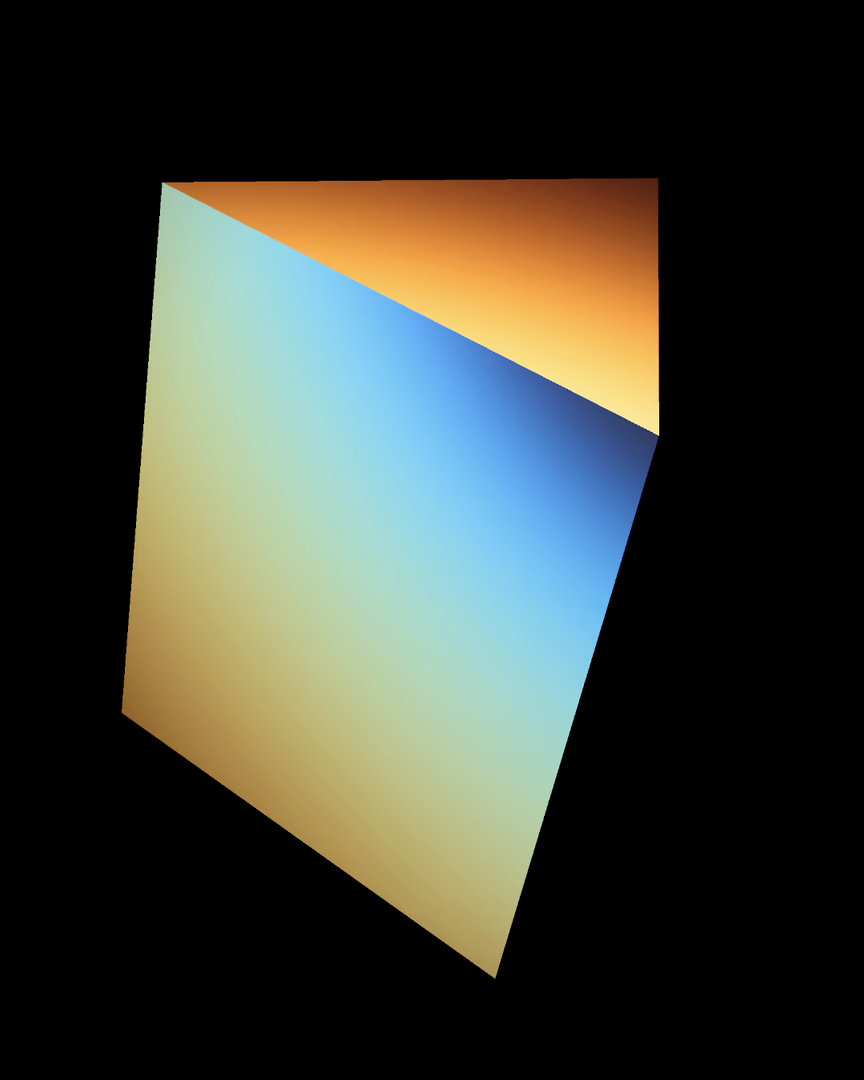
Move the cursor. Three key lights follow it, and their colours are not chosen: each is a third of the same near-white the rest of the site is set in, pushed a little way around the hue circle so that the three of them add back to exactly that white. Hold still and they converge, and the prism is lit as if by one lamp.
Move, and they separate. The prism is then lit from three directions at once by three different colours, and each facet takes the one it faces. Press and hold to gather them back.
Underneath that, and whether or not anyone is moving, the glass does its own work. Each wavelength leaves a prism turned by a different amount, so the sheen is drawn once per wavelength at slightly different angles and lands across each facet as a band that is warm along one edge and cool along the other. The two are meant to be told apart: the separation is yours and stops when you stop, the spectrum is the prism’s and does not.
This is the piece where the series’ one-hue rule is suspended, deliberately and once. Everything else holds — the void, the near-black glass, the rationed maximum that no pixel in it reaches.
WebGPU only, and honestly so: where WebGPU is missing the page shows the rendered still rather than a black rectangle. No camera, and nothing leaves the machine.