Tessera
A cube of glass holding a solid that is mostly holes — refracted through the shell that contains it, and sealing itself shut when you ask.
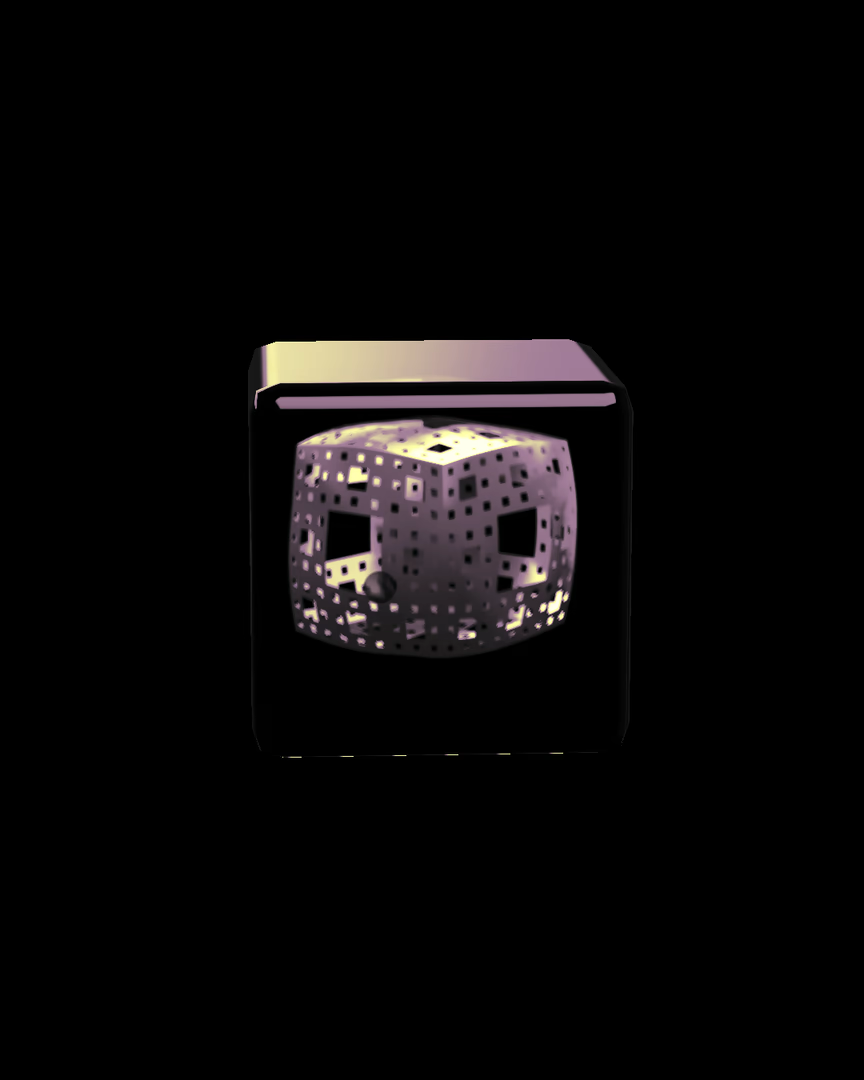
Turn it. Everything you can see through is still solid.
A cube of glass, turning slowly. Inside it is a solid that is mostly absence: a cube with cubes taken out of it, and cubes taken out of those, three levels down, so that looking at it is mostly looking through it. Every hole goes all the way through, and so does the light.
The glass is real glass and not a tint over the top. What you see inside the cube is the sponge refracted through it, bent by the shell's own thickness, which is why the structure shifts as the cube turns rather than sitting flat behind a window. The sponge is one face of itself, drawn six times through the cube's own rotations, because a Menger sponge is symmetric under every rotation a cube is.
Click it and it closes. Every tunnel travels inward and seals, and what is left is a smooth body with no way in — the same volume, admitting nothing. Click again and it opens. Neither state is the resting one.
The palette is the site's, with one addition: a mauve that sits squarely in the midtones and therefore owns most of the frame. Every physical term upstream — Fresnel, dispersion, thin-film iridescence — still collapses to brightness before the colour is chosen, so the physics stays grey and the hue comes from the ramp.
WebGPU only, and honestly so: where WebGPU is missing the page plays the rendered loop rather than a black rectangle. No camera, and nothing leaves the machine.