Lamina aeris
A lens resting on glass, lit by three laser lines, draws three sets of rings at three spacings, and every colour in the frame is a place where they disagree.
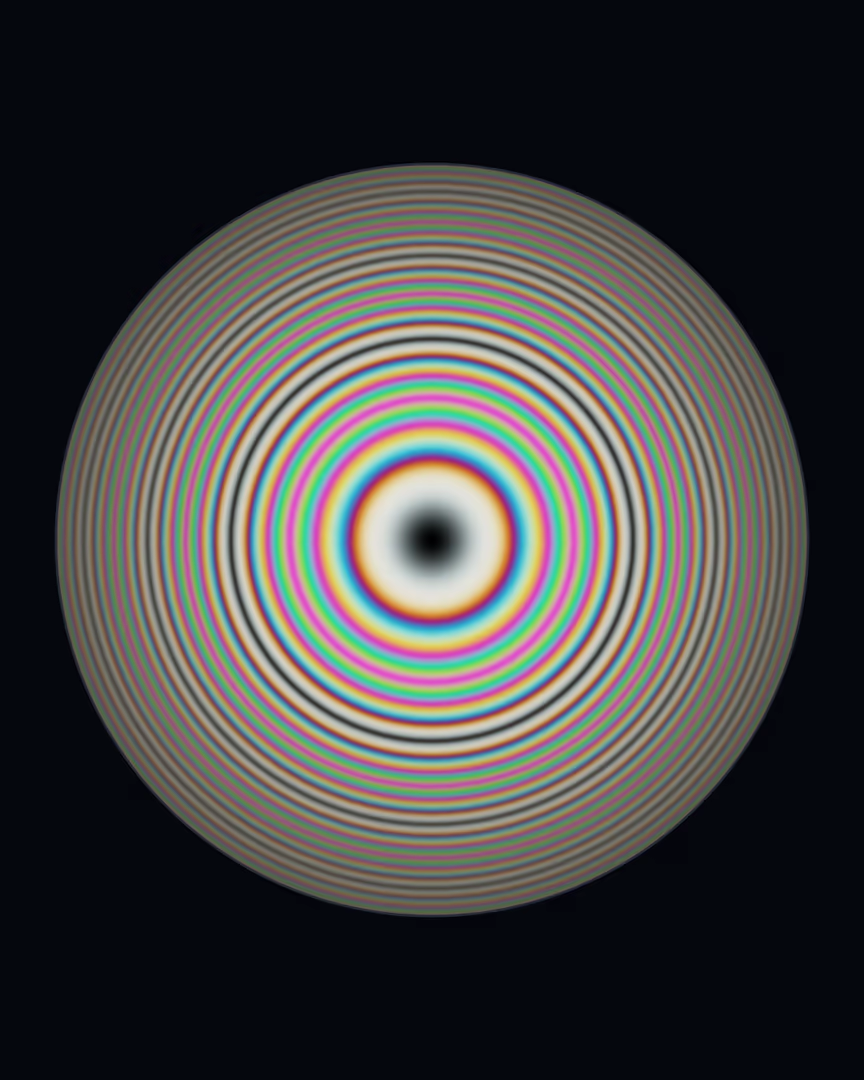
Every ring is a thickness of air.
A curved lens rests on flat glass. The air between them is a film that grows thicker with the square of the distance from the centre, and light reflecting off its top and bottom interferes into rings, one for every half wavelength of air. These are Newton’s rings.
The lamp is three laser lines, red, green and blue. Each has its own wavelength, so each draws its own rings at its own spacing. Where the three agree, a ring is black or near-white. Where they disagree, it is a colour, and every few rings they agree again.
Through the loop the lens lifts by 1.575 micrometres, which is exactly five red rings, six green and seven blue. The rings flow into the centre and vanish there without end, and the last frame is the first. The endless motion is a thousandth of a millimetre.
Rendered offline from a single closed-form shader by the same module code a live page would run. No camera, and nothing leaves the machine.